

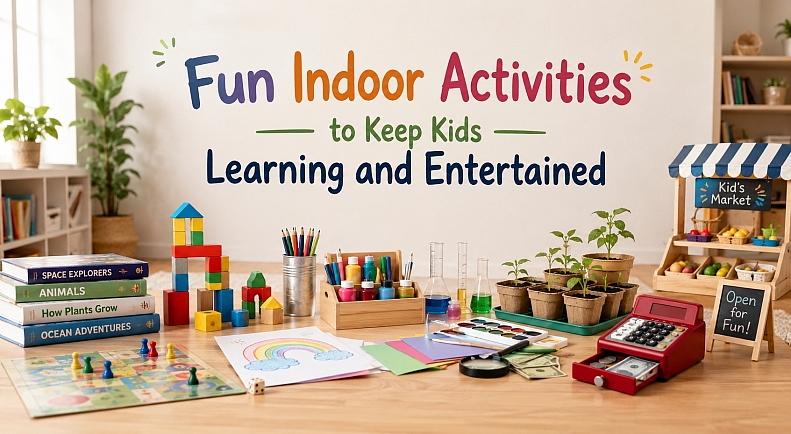
Fun Indoor Activities to Keep Kids Learning & Entertained
For busy parents keeping children entertained indoors, a stretch of bad weather can turn the house into a loop of boredom, bickering, and screens. The real challenge of indoor child engagement is keeping attention steady when kids can’t run outside, and doing it without feeling like school-at-home. Indoor educational activities for kids work best when they hit the sweet spot between curiosity and comfort, so children stay absorbed while picking up real skills.
With the right mindset, balancing fun and learning at home becomes a calmer way to handle activities for children during bad weather.
Understanding Educational Entertainment at Home
Educational entertainment is the idea that play can do double duty: it feels like fun, yet it quietly builds real skills. In practice, it often looks like guided play is an educational approach where kids lead the action, and you add just enough structure to stretch their thinking.
Why it matters is simple: when kids are invested, they practice focus, memory, language, and flexible problem-solving without the pushback that “lessons” can trigger. Research on cognitive development shows play can support the kind of thinking that helps learning stick.
Think of it like packing snacks for a long trip. The activity is the fun wrapper, but inside are nutrients like counting, planning, and cooperation. A scavenger hunt becomes early math, and a blanket fort becomes engineering. That same lens makes a mini “kids’ business” game feel irresistible and surprisingly skill-rich.
Launch a Pretend Kid Business—and Give It a Logo
When learning feels like play, kids tend to stick with it longer, so try turning imagination into a mini “business.” Help your child dream up an imaginary shop or service, pick a name, and talk through what they’d “sell,” who their customers are, and what problems they’re solving as they go. Then you make it feel real if you use an online logo maker to create logos from easy-to-use templates and let them tweak fonts and colors until it matches their brand’s vibe. Up next, you’ll find more indoor activities that teach skills without ever feeling like school.
Pick Indoor Activities That Teach Without Feeling Like School
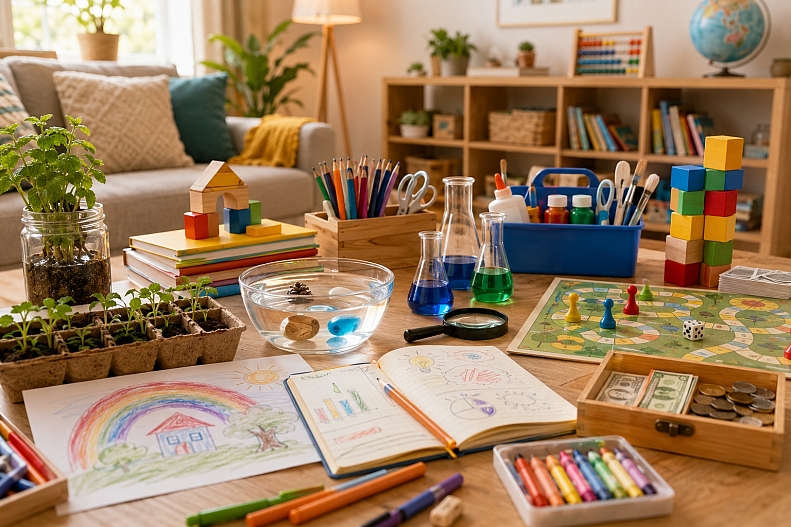
Think of your home like a mini “learning city.” You can hop between neighborhoods - science, art, games, books, calm-down corners - so kids get variety without feeling like they’re stuck in class.
- Run a 10-minute “Kitchen Lab” science test: Pick one quick experiment and keep it super hands-on: a classic sink or float setup works with a bowl of water and random safe objects. Have your child make three predictions first, then test and sort objects into “sank” and “floated.” It builds observation and reasoning, and the short timebox helps prevent the meltdown that happens when experiments drag on.
- Turn arts and crafts into “product design” for the kid business: Make packaging, signs, or a menu that matches the logo they created earlier, paper “shopping bags,” price tags, or a poster with a simple slogan. Add one real-world constraint: only use five materials from your craft bin, or make it sturdy enough to carry three small toys. Design challenges feel like play, but they sneak in planning, iteration, and pride in a finished “brand.”
- Host an educational board game café night: Choose one board game that quietly teaches skills, math, logic, vocabulary, and geography, and run it like a café. Kids can make “reservations” on a notepad and earn play-money tips for good sportsmanship or explaining a strategy. If it connects to their pretend business, have them design a two-sentence ad for game night and pick a fair “entry fee” (one chore, one joke, or one trivia fact).
- Start a family book club with tiny, doable roles: Keep it light: one short chapter, poem, or picture book per meeting, 15–20 minutes max. Assign roles like “Question Captain” (asks one why/how question) and “Word Collector” (finds two new words). For fresh reading material, a little free library can turn book-picking into a mini adventure, and kids love the idea of taking one and leaving one.
- Build a “calm skills” station with two go-to relaxation techniques: Teach one breathing pattern and one muscle-release move, then practice them when everyone is already calm. Example: breathe in for 4 counts, out for 6 counts, five times; then do a “tighten and melt” squeeze of fists/shoulders for 3 seconds, release for 5. When “I’m bored” is really “I’m overloaded,” these tools give kids a way to reset without screens.
- Try indoor gardening activities with a simple growth journal: Start with the easiest win: sprout beans in a clear jar with a damp paper towel, or plant herbs in a sunny cup. Give kids a tiny job schedule: water every other day, rotate the pot daily, measure growth twice a week. Tie it back to the pretend business by designing plant labels, setting a “market day,” or budgeting a few coins for seeds versus soil.
Questions Parents Ask About Indoor Learning Fun
Q: How do I get my child to start an activity without a battle?
A: Offer two choices and a tiny starting step: “Do you want to begin with drawing or a quick game?” Set a 5-minute “try it” timer so it feels low-risk. Once they are moving, kids often stay longer than you expect.
Q: What if my kids are different ages and everything feels unfair?
A: Use the same theme, different roles. Younger kids can sort, match, or decorate while older kids write rules, keep score, or explain the “why.” If you rotate who gets to be the “leader,” everyone gets a turn to shine.
Q: Should I worry that screens will replace learning activities?
A: Balance matters because excessive screen time has been linked to increased rates of anxiety, depression, irritability, and cognitive issues. Use screens as a tool, not the whole plan: watch one short clip, then do a hands-on “show what you learned” task.
Q: What do I do when attention spans melt down halfway through?
A: Stop while it is still going okay and save the rest for later. Break activities into mini rounds with a quick reset in between: water break, stretch, or a one-minute tidy. Short wins build confidence and reduce the pressure to “finish.”
Turn Indoor Time Into Learning Moments Kids Love
When kids are restless indoors, it’s easy for home to feel like a battleground between boredom, screens, and a parent’s to-do list. The steadier path is the one this guide leans on: keep indoor learning approachable, make education fun at home, and stay lightly involved so activities feel shared, not assigned. With accessible child activities and a simple routine, indoor days become calmer, more curious, and easier to repeat. Pick one indoor activity, repeat it weekly, and celebrate small learning wins.
Categories
Recent Posts






0.0886