

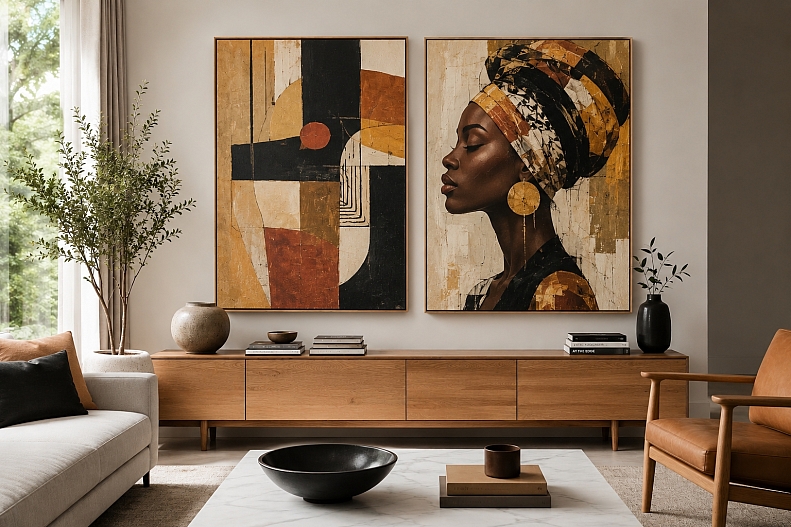
Abstract vs. Portrait - Which Art Style Suits Your Home?
Abstract art has always fascinated me, especially the kind that makes you question perspective or appreciate culture differently. That is one reason African American Canvas Wall Art continues to stand out to me; it combines artistic expression with cultural storytelling in a way that transforms a room.
But the number of people I've spoken to who are doing everything right, decorating-wise, and still living in spaces that feel vaguely unsettled. Quite often, the missing piece is the artwork. It's almost always because the abstract vs. portrait art question was answered with "whatever was on sale" rather than any actual thought.
Table of Contents
- What Is Abstract Art and Why Do People Love It?
- The Timeless Appeal of Portrait Art in Home Decor
- Abstract vs. Portrait: Key Differences in Style and Mood
- How to Choose Based on Your Interior
- Mixing Abstract and Portrait Art for a Unique Look
- Where to Place Each Style in Your Home
What Is Abstract Art and Why Do People Love It?
It took me a long time to fully appreciate abstract art, and that just makes me wonder about the whole idea. It began to form a thought once I saw works involving enriching African American Canvas Wall Art. For you see, it just never asks anything from you, just no hassle and no unwanted drama.
No subject to identify. No story to follow. No face reading yours back. You walk past it on the way to make coffee, and the room just feels a certain way, and you don't have to do any work to get there. That non-demand? That's actually the whole power of it.
A canvas layered in deep rust and rough texture communicates something without a subject, without a title, without you needing to understand art history. The body just gets it first, and the brain follows behind, trying to name what happened.
I believe this completely. I've watched it happen in rooms.
Abstract art for home decor specifically earns its keep in spaces built on restraint. You know the kind: pale walls, furniture that leans more architecturally than cozy, clean sightlines, nothing extra. Those spaces are deliberately stepping back, and what they need is a visual center that brings weight without adding noise.
That's what a well-chosen abstract canvas does. The room holds its quiet, and the painting holds the energy, and that balance is actually the design decision. Not an accident, not a happy coincidence. The decision.
One more thing on this. A large abstract piece in the right spot stops being an object on a wall. It becomes what the room is organized around. People feel that the second they walk in, even without knowing why.
The Timeless Appeal of Portrait Art in Home Decor
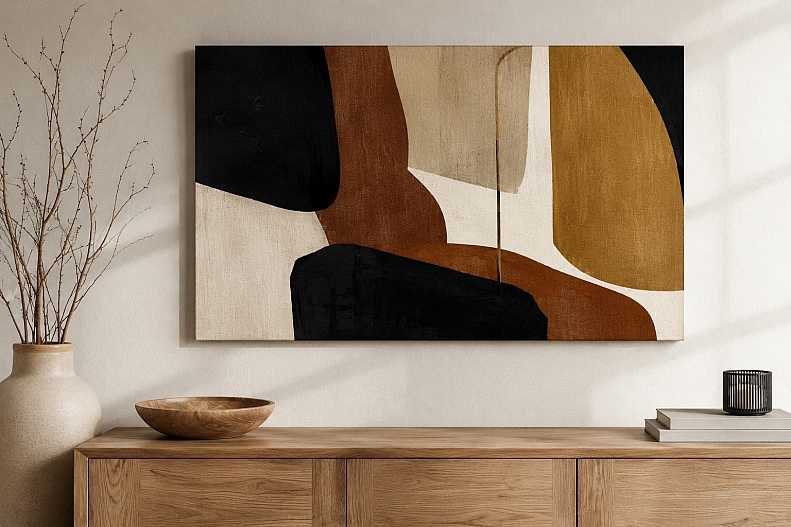
Portrait art puts a person in the room. An actual face on the wall.
There is a presence that portrait art creates. Once I went through my galleries consisting of African American Canvas Wall Art, I got to understand the idea even more. For you see, there’s a face that holds its expression at you, whether you stop to look or not, and that presence does something to the atmosphere of a space that you stop consciously noticing after a while, but never stop feeling.
That presence quietly changes how the room feels.
Portraits now cover grandparents and cultural figures and historical faces and sometimes strangers whose expressions carry something worth having in a room. You don't need a personal connection to the subject. You need the face to bring something.
Contemporary portraiture also barely resembles its own formal oil painting history anymore, which is honestly great news for people decorating actual homes. Loose brush studies with marks you can see. Graphic illustrated faces, strong lines, flat color.
Photography that turns a corridor into a reason to pause. You can browse pieces across the full range of what portrait art looks like today on the African American Canvas Wall Art because I sure enjoyed their vibes. I spent an embarrassing amount of time on there when I first found it.
And from a purely physiological standpoint, portrait art naturally draws attention because people are wired to notice faces quickly. Deeply wired instinct, older than any design principle. Portrait art uses that deliberately.
Abstract vs. Portrait: Key Differences in Style & Mood
Abstract communicates before conscious thought arrives. You walk into a room anchored by a warm, heavily textured canvas, and the emotional tone is already set before your eyes have properly landed anywhere. The room has a feeling, and you just settle into it. Portrait does something slower and more specific. The face pulls you close. You stop. You look longer than you planned to. The room holds you differently and through a completely different route.
This also gets more meaningful when art carries cultural identity. African American Canvas Wall Art works powerfully through both modes, but very differently in each. Abstract work in that tradition can carry history and weight through color and form in ways that work underneath the surface, felt before they're named. Portrait work does something else. It puts specific faces on walls where they belong. Not as background decoration. As a deliberate act of making certain people and histories visible and centered in a home.
That's not a styling note. That's the whole point of that work.
How to Choose Based on Your Interior
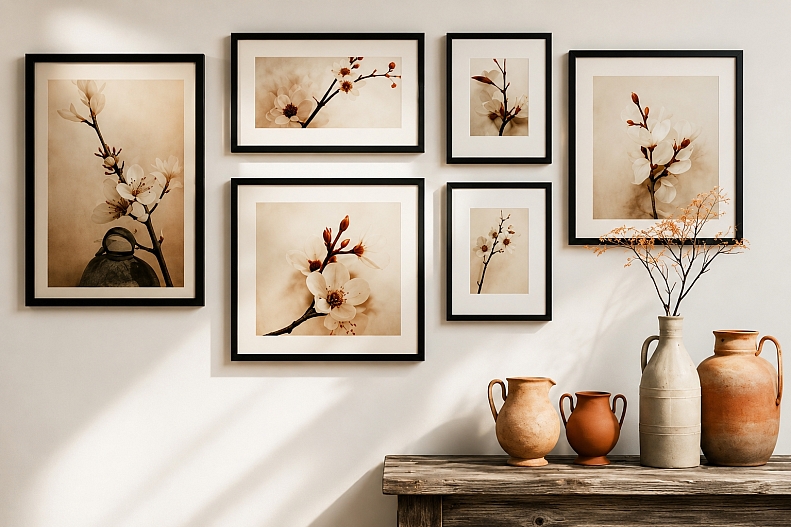
Most people do this backwards, and I did too for a long time. Personally, I was more of a fan of African American Canvas Wall Art, but anyone can have a distinct taste.
You find a piece you love, or you see something and want it, and then you spend time convincing yourself the room needs it. Sometimes you're right. A lot of the time, the room ends up carrying a low-level wrongness that nobody examines too closely because nobody wants to question the art they already hung and already told three people they loved.
What does the room need to do?
Rooms built on restraint, pale walls, architectural furniture, clean lines, nothing excessive, leave a deliberate gap. They need something with emotional weight that doesn't add visual noise. Abstract fills that gap cleanly. The room stays quiet, the painting holds the energy. That's the whole trade-off, and it works when you let it.
Viewing distance is not flexible. Abstract reads clearly from the other side of a room. Portraits frequently don't need you close to actually land. If a piece has to register from fifteen feet away, abstract wins that without much of a contest. Things of anyone, whether it is you or any art lover, liking works similar to African American Canvas Wall Art, they just make a stand-out appeal for their creative taste.
Tonal warmth matters too, and this is the one people get wrong constantly without ever diagnosing why. A warm amber room with a cold grey-blue painting sitting in it never fully settles. The mismatch is something people feel rather than see. It just creates this nagging sense that something is slightly off. Which is ironic given that most people choose the cold painting because it "matches" something in the room.
Which brings me to the thing I will say directly: Rather than matching artwork solely to your wall color, consider the overall mood you want the room to create. Matching the color produces coordinated forgettable rooms. Nobody stops to look at a piece chosen to complement the accent wall. Mood compatibility is the goal. Color coordination is not.
Mixing Abstract and Portrait Art for a Unique Look
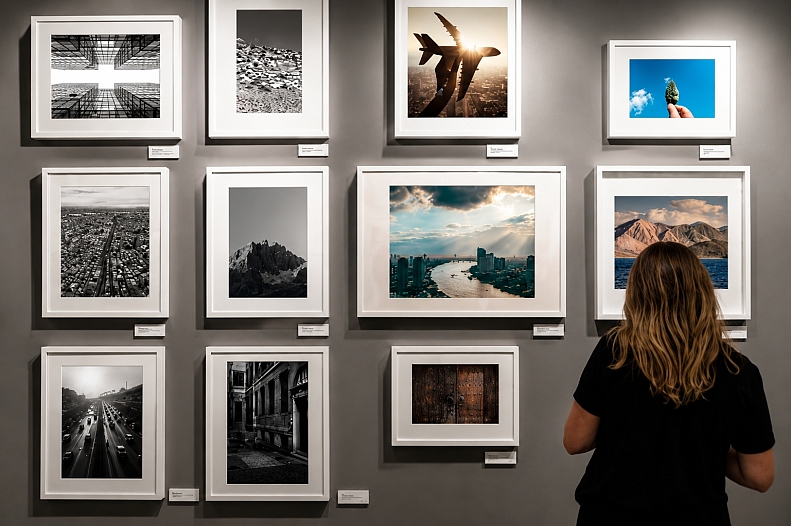
The rooms that stay genuinely interesting over the years seldom commit to one lane. I've thought about why, and I think it comes down to this: a single-style collection has nothing to push against. Mixed collections have dialogue.
When you mix abstract and portrait art with real intention behind it, not just hanging things that seem roughly compatible, the wall creates a conversation. Tension in the best sense. A loosely painted face next to a purely compositional canvas gives the eye somewhere to travel.
One thread has to connect all of it, though. Without that connecting thread, the wall just reads as accumulated stuff, and people feel that immediately, even if they'd describe it differently.
Tonal consistency is the most reliable thread I've found. All warm tones across every piece, regardless of subject or style, pull a mixed collection together without the individual pieces needing to have anything else in common. A matching frame finish does the same job with even less coordination required between the actual works.
Gallery walls are where this really pays off. A dominant portrait as anchor at the center, abstract works spreading outward from it, creates a natural hierarchy. Portrait holds the center, abstraction radiates outward, and the eye follows a path instead of bouncing between equally competing pieces. That structure, one clear anchor point with supporting works around it, is the difference between a wall that reads with real intention and one that just occupies the space.
Different sizes throughout. Always. A row of matching dimensions installed together has the energy of a doctor's office waiting room, regardless of how individually strong the pieces are. Break it up every time.
The likes of African American Canvas Wall Art have some genuinely useful examples of mixed collections done well, if you want to see how this actually plays out visually before you start moving things around.
Where to Place Each Style in Your Home
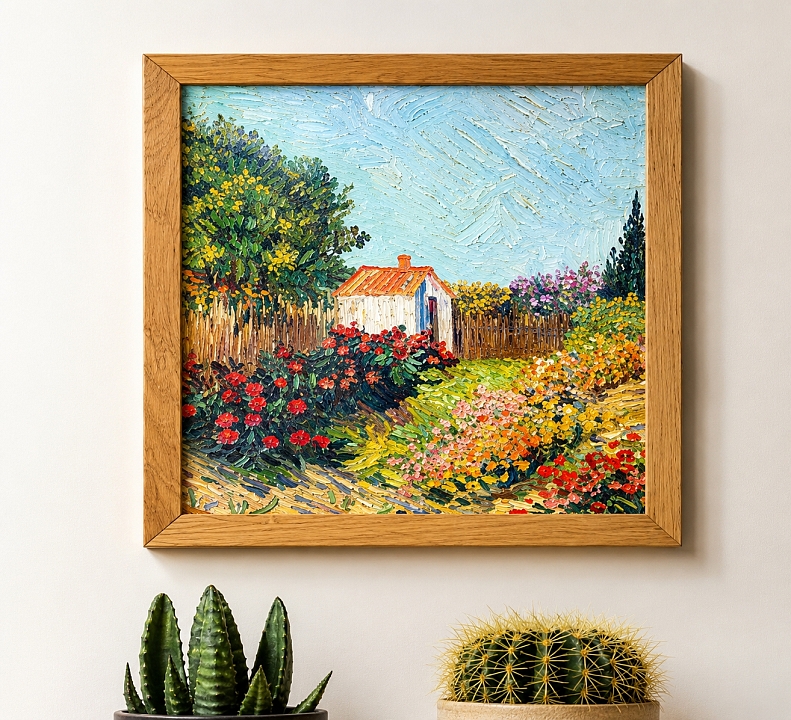
Wrong placement is what a strong piece doesn't come back from. I've seen genuinely beautiful work disappear into a wall within a week because it was in the wrong spot, and the room develops this quiet wrongness that just sits there until someone finally admits the piece needs to move.
Abstract art belongs wherever distance is involved. Living rooms, dining spaces, wide entrance hallways, anywhere a piece needs to register before someone is standing close to it. That's abstract territory. A large canvas in the right spot on a statement wall stops being a hung object and becomes what the room is actually organized around. People feel that the moment they walk in.
Portrait needs proximity to work. Reading corners, home studies, and hallways are where people naturally slow down. A portrait placed in a wide open space where nobody lingers can lose some of its impact. Genuinely. That's not a criticism of the piece; it's just a placement failure and a fixable one.
Bedrooms deserve specific thought. Both styles ask for restraint there. A quiet, meaningful portrait in a bedroom is one kind of experience, intimate, considered, something you wake up to that doesn't demand anything.
A large, dramatically charged portrait above a headboard is something completely different and a lot more specific and deliberate. Know which one you're making before you hang it because the difference between those two experiences in the same room is significant.
Kids' rooms and hallways are underrated, by the way. Hallways are where portrait art often does its best work. People slow down, look, and there's no pressure to keep walking past it quickly.
People Also Ask
Is abstract or portrait art better for a small room?
Honestly, abstract art often works especially well in small rooms. One large canvas can bring real atmosphere and visual weight without the space feeling crowded or busy.
With African American Canvas Wall art or other cultural art, portrait art needs you to be physically close to work properly, and smaller rooms don't always give you that natural distance. That said, a single intimate portrait in a corner reading nook in a small room can be perfect; it's not an absolute rule, just a tendency.
Can you mix abstract and portrait art on the same gallery wall?
Yes, and in my experience, it often produces more interesting results than committing to one style entirely. You need one consistent thread running through everything, tonal warmth, matching frame finish, a shared color story; the wall just reads like an accumulation rather than an intention. Get that thread right, and the contrast between the two styles actually becomes an asset rather than a tension you're fighting against.
What art style works best in a living room?
Large abstract pieces tend to do well in living rooms because they read clearly from a distance and set the emotional tone of the whole space before anyone's properly settled in. A strong portrait absolutely works too, but it needs a spot where people will actually pause and engage with it up close rather than just moving through.
If you were to choose, it should end with the idea of something that displays a unique side of you. The mistake: hanging portrait art in a wide open living room space where nobody naturally stops; it ends up doing nothing for the room.
Abstract art and portrait art are not competing answers to the same question. They answer completely different questions. One shapes how a room feels before anyone consciously registers anything. The other fills a space with human presence and draws people in close.
Whether you choose abstract or portrait art, the best piece is one that reflects your personality and complements your home's atmosphere. African American Canvas Wall Art offers both expressive abstract designs and meaningful portrait pieces, making it easy to find artwork that feels personal while elevating your space.
The goal was never picking the right style off a list. It was figuring out what your room is asking for. Then, trusting yourself enough to give it exactly that, rather than defaulting to whatever was fine.
LEAVE A COMMENT
Recent Posts




0.1164