

Creative After-School Ideas to Boost Kids’ Confidence & Curiosity
Busy parents seeking after-school activities often end up stuck between two extremes: pricey programs with complicated logistics, or defaulting to more screen time because everyone is already running on empty. The core tension is real; families want engaging childhood development options that build confidence and curiosity, but parental concerns about extracurricular activities like cost, safety, scheduling, and overstimulation can make every choice feel heavy.
Kids still need room to create, practice, and belong in ways that fit their energy and personality. A practical approach to creative enrichment for children can support real growth while staying realistic for family life.
Quick Summary of Creative After-School Options
- Choose creative, out-of-the-box after-school activities to build confidence through skill practice and small wins.
- Explore options that spark curiosity and expand horizons beyond typical extracurriculars.
- Look for activities that match a child’s interests so motivation and follow-through feel natural.
- Use creative extracurriculars to encourage experimentation, problem-solving, and pride in making something unique.
How Creative Programs Build Confidence
A helpful starting point is this: confidence grows when kids get many chances to try, tweak, and try again. Diverse after-school programs pair hands-on making with digital creativity, so children can test ideas, see quick results, and feel proud of progress. In learning terms, hands-on learning means kids learn by doing, not just listening.
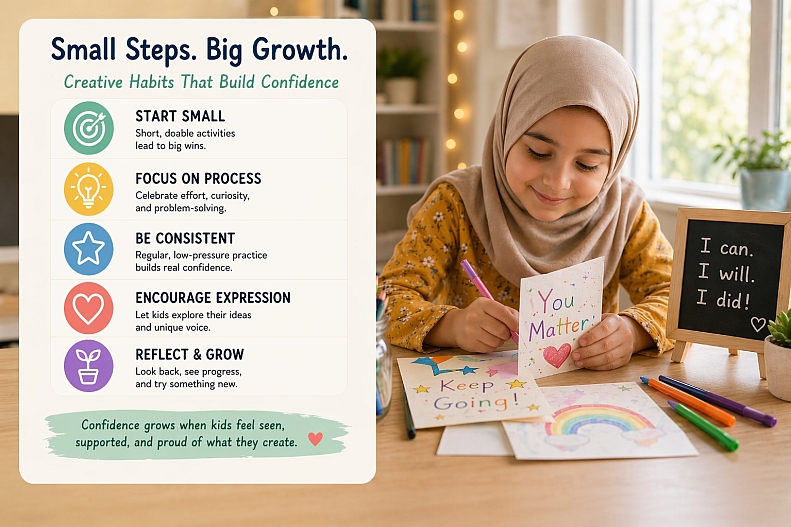
This matters for families who love crafts and handmade gifting because skills become visible fast. When kids practice in a low-stakes setting, they build patience, problem-solving, and an “I can figure it out” mindset. That confidence often spills into school, friendships, and creative hobbies at home.
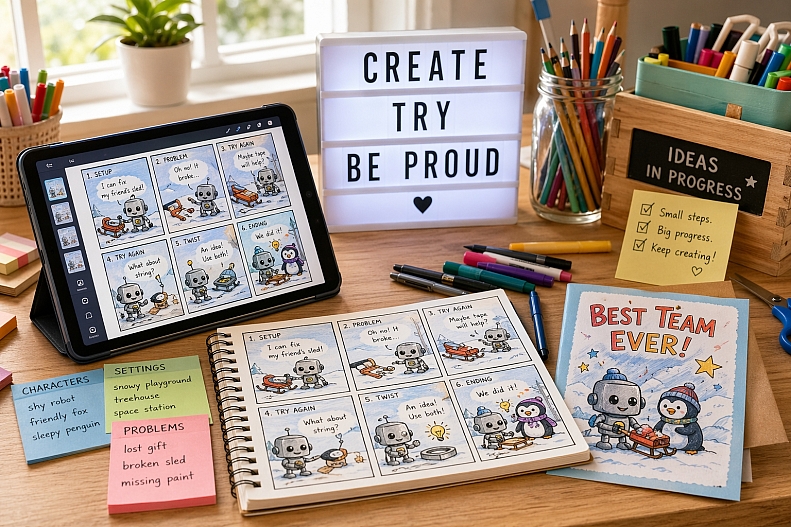
Picture a child designing a simple comic on a tablet, then recreating one panel with paper, markers, and stickers. The screen makes experimenting feel safe, and the physical version turns it into a keepsake. Over time, they start choosing harder ideas on purpose.
Try Fresh Activities—Plus a One-Night Comic-Making Plan
A great after-school activity works like a confidence “recovery plan”: it’s consistent, low-pressure, and built on small wins kids can repeat. Use the ideas below to mix hands-on learning with modern creativity outlets, so your child can practice skills safely and show off progress in a way that feels real.
- Start a “skill sampler” craft rotation: Pick one micro-skill per week, cutting shapes, mixing paint, simple stitching, stamping, or collage, and keep the bar low: 20–30 minutes, one finished object. This works because craft projects can both inspire creativity and build tool comfort without the pressure of a big final masterpiece. End each session by choosing one thing to save (a swatch card, mini painting, or patterned paper) for a future handmade card.
- Turn performing arts into a “brave minutes” routine: If your child is curious about performing, commit to 10 “brave minutes” after school: a short monologue, a simple dance combo, or a sing-along with pronunciation practice. Add one supportive constraint, perform behind a curtain, use a puppet, or record audio only, so experimenting feels safe. Once a week, invite a trusted family member as the “audience” and let your child choose the feedback question: “Was I loud enough?” or “Did the character feel happy or worried?”
- Run a kitchen-table STEM studio: Choose one STEM experiment for youth per week that has a clear, visible result in under 30 minutes, paper bridges, balloon rockets, sink/float trials, or a “mystery powder” test with baking soda and vinegar. Give your child a simple lab page: prediction, test, what changed, what I’d try next. Confidence grows when kids see that “wrong” outcomes still create useful data.
- Use language learning for handmade gift-making: Pick a theme, colors, animals, or food, and learn 8–10 words in a new language, then use them in a craft. Example: make a set of mini flashcards with watercolor doodles, or letter a birthday card using the new words and a phonetic note inside. This blends curiosity with a tangible product kids can give away.
- Choose volunteering that produces something visible: Look for short, project-based options: assembling care kits, making bookmarks for a library, creating cheerful cards for community groups, or helping a neighbor label seed packets. “I helped” feels more believable when there’s a finished bundle in their hands. Keep a photo log of the items made, so progress is easy to revisit.
- Try a kid-friendly micro-business that matches your hobbies: If your child likes words, they can offer editing services for a relative’s newsletter, a student’s short essay, or a club flyer, starting with one page and one deadline. If they love crafts, sell a tiny product line like three card designs, two bookmarks, or one painted gift tag style. The goal isn’t profit, it’s learning to price time, accept feedback, and deliver on a small promise.
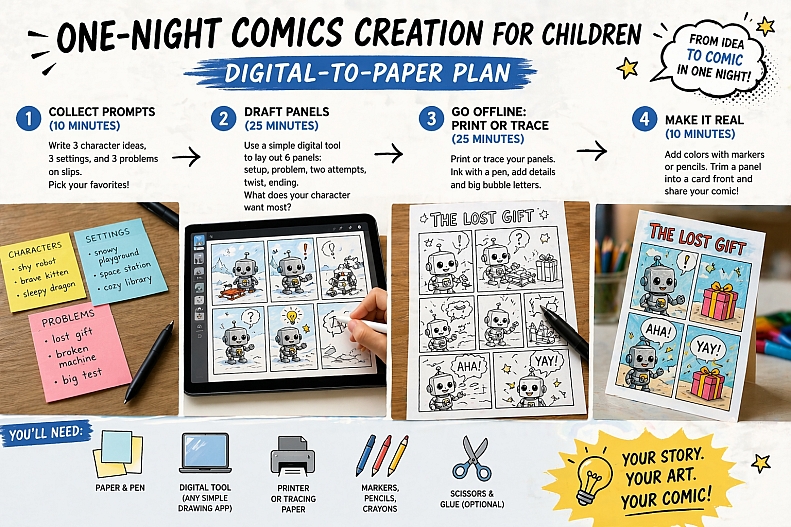
- One-night comics creation for children (digital-to-paper plan):
Move 1, Collect prompts (10 minutes): write 3 character ideas, 3 settings, and 3 problems on slips (e.g., “shy robot,” “snowy playground,” “lost gift”).
Move 2, Draft panels (25 minutes): use a simple browser-based cartoon maker or drawing tool to lay out 6 panels: setup, problem, two attempts, twist, ending. Parents can engage in digital storytelling by asking, “What does your character want most?” Many families generate cartoons with AI to fit naturally into this quick drafting step.
Then go offline: print or trace, ink with a pen, add big bubble letters, and trim a panel into a handmade card front.
After-School Options Compared at a Glance
These options are all extracurricular activities, meaning learning experiences outside the school curriculum that are typically voluntary and can happen at home, in clubs, or online extracurricular activities. For craft hobbyists and gift seekers, the goal is simple: pick the route that creates frequent “finishable” moments kids can turn into handmade keepsakes, while staying realistic about time, cost, and energy.
|
Option |
Benefit |
Best For |
|
Skill-sampler craft rotation |
Fast wins; tool confidence grows weekly. |
Handmade cards, tags, mini gifts. |
|
“Brave minutes” performance practice |
Builds social courage in tiny steps. |
Shy kids who are testing their stage presence. |
|
Kitchen-table STEM studio |
Curiosity plus visible results. |
Kids who love testing and building. |
|
Micro-volunteering with a product |
Purpose and pride with a take-home proof. |
Kids who are motivated by helping others. |
|
Hobby-based micro-business |
Feedback skills and follow-through. |
Older kids who are ready for deadlines. |
If your schedule is tight, choose the option with the lowest setup and the quickest “finished object.” If your child needs confidence more than novelty, prioritize repeatable routines over big projects. Choosing a best-fit lane now makes the next week feel lighter and more doable.
Start One Creative Routine That Builds Confidence After School
It’s easy to feel torn between what looks “best,” what fits the schedule, and what a child will actually enjoy after a long day. The steadier path is the one this guide emphasizes: empowering parents in activity choices by starting small, staying low-pressure, and letting interest and repetition do the heavy lifting.
Over time, the benefits of creative involvement show up as stronger problem-solving, calmer focus, and confidence that grows from real skill-building. Choose one activity, commit briefly, and let consistency do the teaching.
Pick one option from the comparison table and set a two-week trial window on the calendar. Those next steps for family enrichment matter because shared creative time builds resilience, connection, and a sense of “we can figure this out” that lasts well beyond after-school hours.
LEAVE A COMMENT
Recent Posts






0.1085