

How to Make Summer Fun & Educational for Kids
Busy parents and caregivers juggling work, childcare, and tight budgets often hit the same snag every summer: kids want freedom and fun, but adults don’t want months of momentum to disappear. The real challenge is balancing fun and education without turning every day into a worksheet battle or a screen-time free-for-all.
With the right mix of productive summer activities for children and steady summer learning engagement, children's development can keep moving in a relaxed, natural way. A little parental involvement in education goes a long way.
Pick 8 No-Stress Activities That Mix Play With Learning
Summer gets easier when you treat learning like a snack bar, not a full sit-down meal. Pick one or two ideas a day, keep it light, and you’ll get the benefits of routine and curiosity without turning break into school.
- Build a “15-minute warm-up” routine: Choose one tiny structured learning activity to do right after breakfast, think 10 minutes of math facts, 5 minutes of handwriting, or a quick logic puzzle. Keep it consistent Monday–Friday so it feels automatic, not negotiable. This kind of low-pressure repetition helps maintain skills during the summer, when math is the hardest-hit area for many kids.
- Run a neighborhood nature scavenger walk: Grab a bag and a simple list (something smooth, something spiky, three bird sounds, a leaf bigger than your hand). Outdoor exploration with kids works because it sneaks in observation, sorting, and vocabulary while everyone burns energy. For older kids, add “photo evidence” and have them label each find at home.
- Try “garden science” in one pot: You don’t need a yard; use a pot, soil, and fast growers like beans or basil. Have your kid measure growth twice a week and draw it on a chart, then ask one why-question each time (Why do leaves face the window? What happens if we skip watering?). Even simple gardening with kids turns into biology, responsibility, and a calm daily check-in.
- Pick a STEM camp, or DIY it in mini-bursts: If your schedule allows, STEM camps for children are great for hands-on projects and built-in social time. No camp? Copy the vibe at home with a “STEM hour” once a week: build a foil boat that holds coins, design a paper airplane test runway, or make a marble maze from cardboard. The secret is setting one goal and one rule, then letting them iterate.
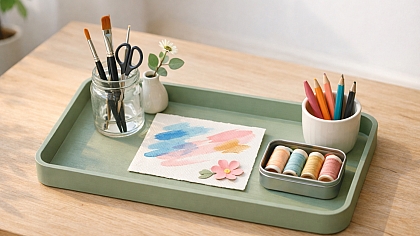
- Set up a rotating craft bin with a weekly theme: For arts and crafts projects, pre-pack 3–5 “grab bags” (collage, weaving, stamping, watercolor), so you’re not hunting supplies mid-meltdown. Give a theme like “Under the Sea” or “Invent a Creature,” then ask for a 30-second artist statement at the end. That tiny reflection builds language skills without killing the fun.
- Use virtual educational resources as a “rainy-day itinerary”: Make a short list of 5–8 kid-safe options, virtual museum tours, science videos, geography games, or audiobook storytimes. Put them in a note titled “Rain Plan” and use a timer: 20 minutes learning + 10 minutes make/summarize (draw one new fact, build the thing you saw, or tell you the coolest moment). Screens feel better when they lead to a real-world output.
- Launch a summer reading challenge with real choices: Create a simple tracker with 20 boxes, then let your kid pick how to fill them: 10 minutes of reading, one chapter, one picture book, or an audiobook session all count. Add fun constraints like “read outside,” “read a funny book,” or “read something that teaches you a skill.” One weekly library trip keeps it fresh and budget-friendly.
- Turn everyday errands into “micro field trips”: At the grocery store, have kids estimate totals, compare unit prices, or plan a snack under a set budget. At the park, practice map skills by choosing a route and timing it, then improving it the next day. Small, repeatable challenges make parental involvement feel doable, and kids barely notice they’re practicing.
Turn Kids’ Stories Into Mini Animations in 4 Simple Steps
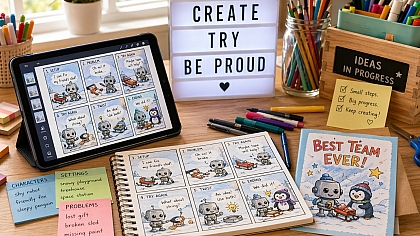
Once you’ve stocked up on easy learning-play ideas, a little digital storytelling can turn those same pretend worlds into something kids can see and share. AI art tools are a fun way to nudge children to explore creativity, because they can take a wild idea from their head and express it visually, often faster than they can draw it by hand. That “quick win” feeling helps build confidence and can quietly grow a real love of learning through the arts.
An AI animation generator makes it especially kid-friendly: it can turn simple text prompts, quick sketches, or even existing images into dynamic 2D or 3D animations in minutes, without requiring advanced design skills. Tools like Adobe Firefly make it easy to bring characters and plot moments to life as short animated videos, so kids focus on imagination and visual expression, not complicated software.
Tiny Summer Learning Habits That Stick

Small habits beat big plans, especially when summer schedules get messy. These repeatable practices keep learning light, consistent, and confidence-boosting, so kids get daily wins without it feeling like school.
Morning Mini-Goal Pick
- What it is: Choose one tiny learning goal at breakfast, like “find 3 new words.”
- How often: Daily
- Why it helps: Kids know what “success” looks like before the day gets loud.
15-Minute Curiosity Window
- What it is: Set a timer for focused exploring: insects, maps, recipes, or a quick science clip.
- How often: Daily
- Why it helps: Short sessions build consistent summer learning habits without burnout.
Weekly Family Learning Schedule Check
- What it is: On Sundays, plan two “learning moments” and two “free-roam” blocks.
- How often: Weekly
- Why it helps: A loose plan reduces decision fatigue and keeps things fun.
Friday Make-and-Tell
- What it is: Kids create one small output: a postcard story, a photo caption, or a DIY demo.
- How often: Weekly
- Why it helps: Making something reinforces learning through project-based learning.
Summer Learning Q&A Parents Actually Ask
Q: How much learning is “enough” during summer?
A: Aim for consistency, not hours. Even 10 to 20 minutes most days can keep skills warm and confidence up. The point is to reduce two months of reading skills loss without turning summer into school.
Q: What do I do when my kid refuses anything educational?
A: Swap “lesson” language for a choice: game, experiment, or challenge. Start with a win they can finish quickly, then stop while it is still fun. If they balk, join in for the first two minutes so it feels like together-time, not homework.
Q: How do I avoid over-scheduling and burnout?
A: Keep one anchor activity and protect big chunks of unstructured play. If afternoons melt down, move learning earlier and shrink it to a single prompt. A good rule: quit before anyone gets cranky.
Q: Which resources are worth using, especially for younger kids?
A: Look for simple, guided activities you can do with what you already have at home. ReadyRosie is an early education tool with short videos that model quick routines without a big prep load.
Q: Can screens be educational without turning into endless scrolling?
A: Yes, if you use guardrails: a timer, one approved app or video, and a tiny “show me what you learned” recap after. Choose tools that create something, like a photo journal or short audio story, instead of just consuming.
Turn Summer Fun Into Real Learning With Three Simple Moves
Summer can feel like a tug-of-war between keeping kids happy and keeping their brains from going on vacation. The sweet spot is a light, flexible mindset: motivate children for summer learning by following their interests, then keep implementing educational strategies in small, low-drama ways through everyday family engagement in summer education. The payoff is less resistance, more curiosity, and days that feel like creating meaningful summer experiences instead of chasing checklists.
Keep it playful, keep it consistent, and learning will follow. Pick three tiny “first moves” for the week - one outing, one skill to practice, and one shared routine - and stick them on the calendar. Those simple rhythms build confidence, connection, and momentum that lasts well beyond August.
Categories
Recent Posts






0.0864