


Build Your Creative Business with Smart Basics & Marketing
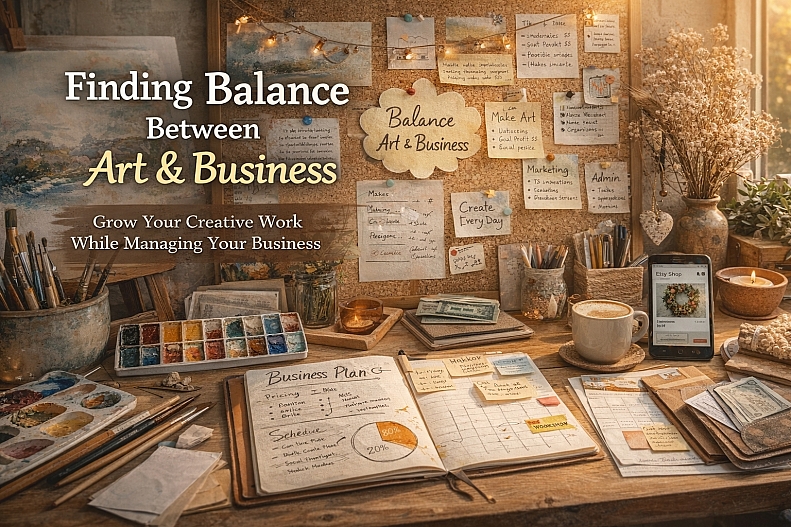
For creative entrepreneurs and creative small business owners selling handmade work alongside busy lives, the hardest part often isn’t the craft; it’s balancing creativity and business without feeling pulled apart. Marketing, pricing, admin, and money decisions can crowd out studio time, leaving creative career management feeling like a constant tradeoff between making art and managing a business.
The result is a familiar loop: bursts of inspired making followed by stalled momentum, second-guessing, and unfinished plans. With a few steady business basics in place, artistic business challenges stop hijacking the work, and the creative spark gets protected.
Understanding Art Business Basics
Art business basics are a small set of tools that keep your creative work sustainable. They include pricing strategies for artists, simple contracts, a repeatable creative workflow, and basic finance habits like tracking income and materials.
Each tool has one job: remove guesswork. A clear pricing method, like square-inch pricing, helps you charge consistently, while contract essentials protect your time and scope.
Picture making a batch of custom ornaments for gifts. With a pricing formula, you stop undercharging. With a contract that includes an escape clause, you can step away if the terms shift. With simple tracking, you know if the batch actually paid off.
A Weekly Rhythm You Can Trust
Your art can stay playful when your business tasks have a home on the calendar. This simple loop keeps projects, gift commissions, and supply spending organized, so you spend less time scrambling and more time making. It also creates a gentle marketing habit that brings steady interest without constant posting.
|
Stage |
Action |
Goal |
|
Plan |
Choose 1 priority piece and 3 admin tasks |
Clear focus and fewer open loops |
|
Build |
Block two maker sessions; prep tools and materials |
Smooth starts and fewer interruptions |
|
Track |
Log sales, expenses, and time in one place |
Know what actually paid off |
|
Automate |
Template invoices, replies, and reorder lists |
Reduce manual, repeatable work |
|
Share |
Schedule one update and one offer |
Consistent visibility without daily pressure |
|
Review |
Note wins, bottlenecks, and one change |
Small improvements each week |
Planning sets the target, building creates momentum, and tracking shows what to keep or cut. Automation protects your energy, sharing keeps your work discoverable, and review closes the loop so next week is easier. Teams that proactively plan marketing efforts often see stronger results, and solo creatives benefit from the same structure.
Market Authentically and Hold Boundaries With Confidence
Authentic marketing doesn’t mean posting constantly or saying yes to every request; it means making it easy for the right people to find, trust, and buy from you while your time stays protected.
- Build a “one-page” portfolio that sells for you: Pick 9–12 photos that show your best range (a few close-ups, a few in-context gift shots, and 1–2 process images). Add short captions that answer what people actually ask: size, materials, customization options, and turnaround time. Keep this page aligned with your weekly rhythm by refreshing one photo and one caption per week instead of redoing everything at once.
- Collect social proof in tiny, repeatable moments: After delivery or pickup, send a two-sentence message asking for a photo of the piece “in its new home” and one line about what they loved. Save testimonials in a folder you can pull from during your scheduled marketing block, because friends and family recommendations can be a powerful driver of trust. If you sell DIY kits, ask customers to share their finished result; those imperfect, happy outcomes often convert better than polished product shots.
- Do outreach that feels like connection, not cold pitching: Make a list of 15 “warm” contacts: past buyers, friends who always comment, local clubs, teachers, or community groups. Each week, reach out to just three with something specific: a seasonal commission slot, a workshop idea, or a “custom gift guide” you can DM. Keep it human, “I’m opening five Mother’s Day card slots; want me to save you one?” is clearer than “Let me know if you need anything.”
- Use a simple deposit policy to protect your calendar: For custom work, set one default rule you can repeat calmly: a deposit to book the slot, the balance due before shipping/pickup, and a clear reschedule window. Put it in writing in your invoice message and save it as a template, so you’re not renegotiating when you’re tired. Deposits aren’t about mistrust; they’re how you reserve time and materials without derailing your weekly plan.
- Control scope with a mini “scope statement” before you start: Before you quote, write five bullets: objective, deliverables, what “approved” looks like, what’s excluded, and the deadline. The warning to define your scope early matters even more in creative projects, where “one more tiny change” can quietly become hours. Example: “Two card designs, three revision rounds total, envelope addressing not included, ready by May 5.”
- Say no in ways that keep relationships warm: Create three boundary scripts you can copy/paste: “I’m booked until __, I can add you to my waitlist,” “That’s outside the current scope, want a revised quote?” and “I only work on commissions during my studio hours.” Reframing boundaries as prioritising your health makes it easier to stay consistent, which clients actually respect.
Quick Answers for Creative Business Peace of Mind
Q: How do I set fair prices for my handmade creations without losing my passion for crafting?
A: Start with a simple formula: materials + labor time + overhead cushion, then add a profit margin that feels respectful. If pricing drains your joy, it usually means your time is undercounted, so track one week and adjust. Keep one “heart project” price tier separate so you can still make purely-for-fun pieces.
Q: What are the simple contract and invoice basics I can use to keep my creative work professional and protected?
A: Use one page that states what’s included, timeline, revision limits, payment schedule, and what happens if the client pauses. Your invoice should match those terms and include due dates, late fees if you use them, and a clear description of the item or commission. A quick checklist of Legal and Compliance Standards can help you spot gaps like licenses and liability coverage.
Q: How can I create a straightforward workflow that helps me stay organized but doesn’t feel overwhelming?
A: Pick three repeatable stages only: inquiry, making, and delivery. Use one checklist per stage and a single “admin hour” each week to update orders, receipts, and inventory. If you feel stuck, remember that many owners operate in survival mode, so small systems are a win.
Q: What are authentic marketing strategies that don’t feel pushy but help showcase my art and attract customers?
A: Think documentation, not persuasion: show one finished piece, one detail shot, and one process note each week. Add a calm call to action like “Commissions open for two spots” or “Message me for color options.” Consistency beats intensity, especially when you are protecting studio energy.
Q: What resources are available if I’m considering expanding from crafting as a hobby to a more serious venture and need guidance on the next steps?
A: First, identify your skill gaps: bookkeeping, taxes, pricing, or client communication. Then choose one structured learning path, such as a short online course, a local workshop, or a mentor program, and apply one lesson per week; if you're exploring business degree options, you can treat that as one possible structured path. For taxes, start by separating business income and expenses now, even before you feel “official.”
Build a Steady Creative Business Without Losing Your Spark
It’s easy to feel like business basics will crowd out the joy that made you start creating in the first place. The steadier approach is a simple system: learn what you need, keep it lightweight, and let your business system evolution match your season and energy.
With a few foundational tools for artists and regular check-ins, scaling a creative career becomes less about constant hustle and more about clear decisions and calmer follow-through. A small system protects your creativity while supporting your income.
Choose three tools to rely on and schedule monthly business reviews to adjust what’s working and gently retire what isn’t. That rhythm is how sustaining creative entrepreneurship becomes realistic, resilient, and healthier over the long run.
Categories
Recent Posts





0.1232